
New electricity connection online 2026: The Ultimate Hassle-Free Guide
Updated: March 2026 • Author: BijliBabu Team • Based on Global Grid Integration Protocols
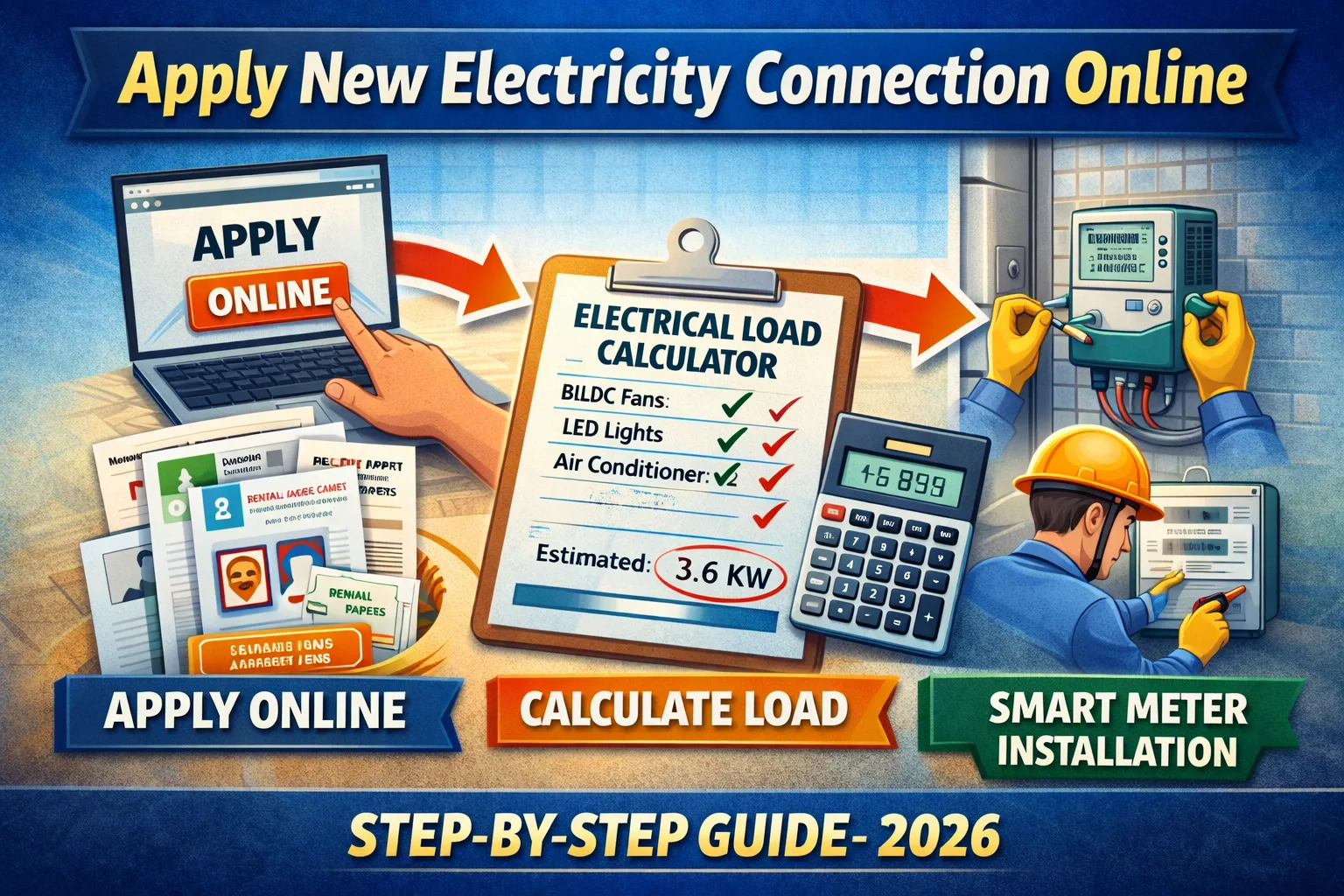
New electricity connection online is an important concept that every electricity consumer should understand before moving into a new home or installing a smart meter infrastructure.
We completely understand that relocating or building a new residence is an incredibly exhausting endeavor. Between managing contractors and organizing logistics, the last thing you want to endure is standing in long, frustrating queues at a local utility office, haggling over paperwork just to get the lights turned on. Historically, securing a grid tie-in was a bureaucratic nightmare plagued by delays and opaque fees.
Fortunately, the digital revolution has transformed this experience. Utility providers globally have migrated to robust, 100% digital self-service portals. Whether you are prepping for a standard residential load or integrating a sophisticated 5kW Rooftop Solar System, you can now execute the entire application from your smartphone. In this empathetic yet highly technical guide, we will walk you through the essential documentation, teach you the mathematics of load calculation, and show you exactly how to bypass the bureaucracy.
Table of Contents:
- 1. New electricity connection online: What Is the Difference?
- 2. Navigating Bureaucracy: Essential Documentation
- 3. Load Calculation Math: Sizing Your Energy Needs
- 4. The Step-by-Step Digital Application Protocol
- 5. Financial Breakdown: Security Deposits & Infrastructure Fees
- 6. Case Study: Sarah’s Seamless Transition to a Smart Grid
New electricity connection online: What Is the Difference?
Many homeowners question the necessity of navigating digital portals when local electricians often offer to "handle the paperwork" for a premium fee. You must understand the structural difference between the old offline method and modern APIs.
In the legacy offline system, your application was subject to human discretion, leading to unpredictable delays and hidden "convenience" charges. Conversely, initiating a new electricity connection online triggers an algorithmic Service Level Agreement (SLA). Once your digital application is submitted and the processing fee is paid via an online payment gateway, the utility provider is legally bound by a timer. In many jurisdictions, urban installations must be physically commissioned within 7 to 10 operational days. The digital trail ensures absolute financial transparency and eliminates corruption.
2. Navigating Bureaucracy: Essential Documentation
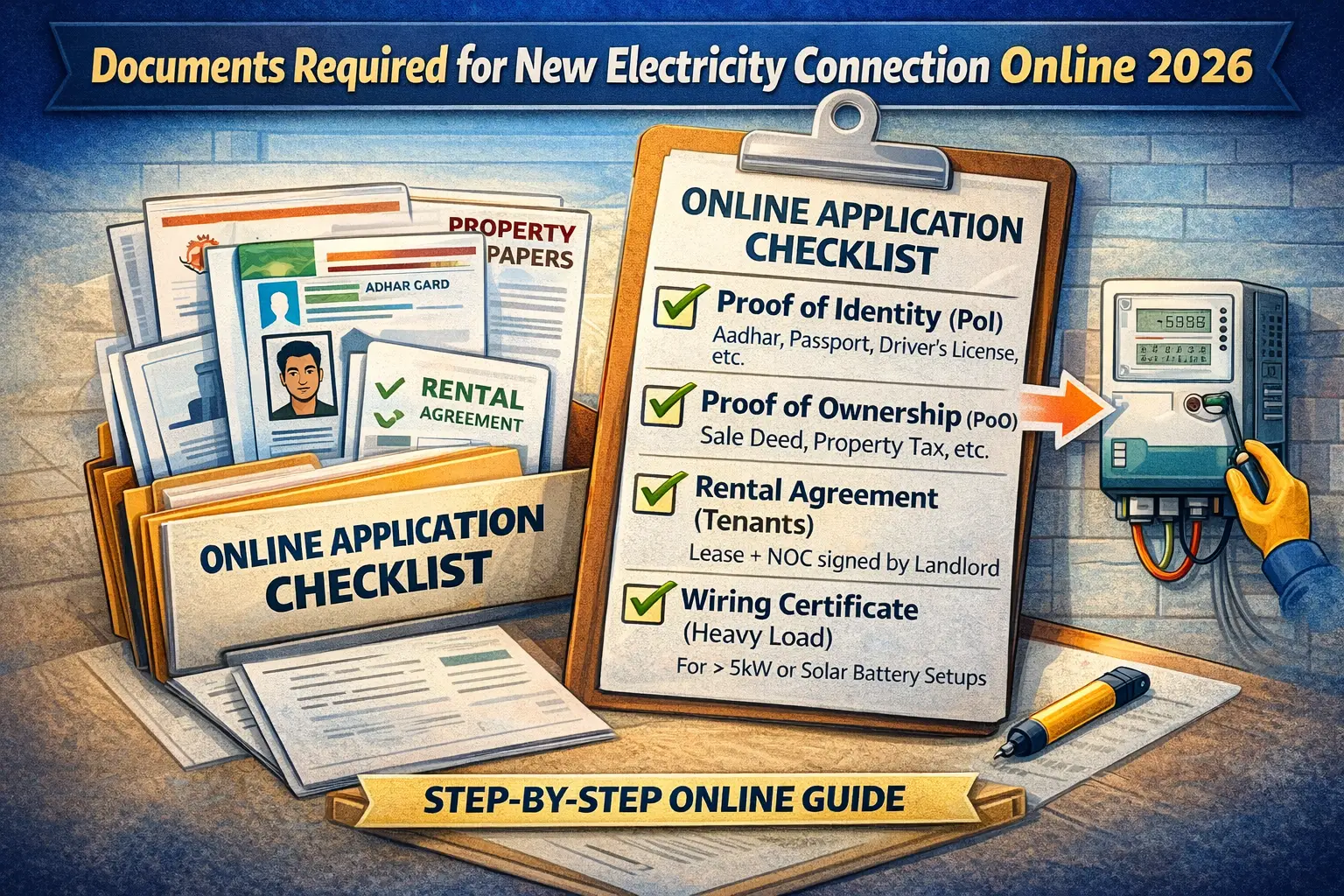
Before launching the utility app, digitize the following documents. Ensure they are clear, legible, and formatted as PDFs or JPEGs (typically under 5MB per file):
- Proof of Identity (PoI): A government-issued ID (e.g., Passport, Driver’s License, or National ID).
- Proof of Ownership (PoO): The registered Sale Deed, property tax receipt, or official allotment letter demonstrating you possess legal rights to the premises.
- For Tenants: If you are leasing, you must upload a valid Lease Agreement alongside a formal No Objection Certificate (NOC) signed by the landlord.
- Wiring Certificate: For heavy commercial loads (usually >5kW) or Off-Grid battery setups, utilities require a safety certificate signed by a licensed electrical contractor.
📊 Size Your Energy Requirements Accurately!
Requesting a lower load than you actually need will trigger massive Maximum Demand (MD) penalties. Calculate your exact requirement:
Appliance Load Calculator Penalty Diagnostic Tool3. Load Calculation Math: Sizing Your Energy Needs
The most critical engineering decision you will make on the application form is defining your 'Sanctioned Load' (measured in Kilowatts). If you select a 2kW load but simultaneously activate appliances drawing 4kW, the smart meter's telemetry will flag a violation, resulting in devastating financial penalties. Let’s execute the load math for a standard 3-bedroom home:
| Appliance Type | Quantity | Estimated Active Draw | Total Wattage |
|---|---|---|---|
| BLDC Ceiling Fans | 4 | 40 W | 160 W |
| LED Lighting Array | 12 | 15 W | 180 W |
| Inverter HVAC (1.5 Ton) | 2 | 1500 W | 3000 W |
| Refrigerator & Electronics | Various | 600 W | 600 W |
| Total Projected Load | - | - | 3940 W (Approx. 4.0 kW) |
Analytical Conclusion: Applying for a 2kW connection would be a catastrophic financial error, leading to a rapid negative balance due to overload penalties. This household must formally apply for a 5.0 kW Sanctioned Load to ensure a safe operational buffer. To optimize energy usage further, consider upgrading to the Best 5-Star Inverter ACs.
4. The Step-by-Step Digital Application Protocol
While UI interfaces vary across global Discoms (such as ConEdison, UPPCL, or British Gas), the underlying API workflow is universally identical:
- Profile Initialization: Navigate to your local utility's consumer portal. Create a secure profile using your email and mobile number.
- Select Service Tier: Choose "New Residential Connection" (often coded as LMV-1 or Domestic Tariff).
- Input Telemetry Data: Provide the exact GPS coordinates or address of the premises, alongside your mathematically verified Sanctioned Load (e.g., 5kW).
- Document Integration: Upload the digitized PoI and PoO documents into the secure portal.
- Initial Processing Fee: Execute a nominal, non-refundable processing transaction via a secure gateway.
- Physical Site Audit: Within 48-72 hours, a utility engineer will physically verify the distance from the nearest distribution transformer to your premises.
- Final Capital Injection: Upon successful audit, the portal will generate a comprehensive 'Estimate'. Pay this online. The utility will then commission your new smart meter within the SLA timeframe.
5. Financial Breakdown: Security Deposits & Infrastructure Fees
When the final estimate is generated on your portal, it will be compartmentalized into three distinct financial components. You must audit these to prevent overcharging:
- Security Deposit: A refundable buffer based on your applied load (e.g., $50/₹400 per kW). With the advent of prepaid smart meters, this requirement has been drastically reduced globally.
- System Loading/Infrastructure Charge: A non-refundable fee contributing to the macro-grid’s transformer and cabling maintenance.
- Meter & Cabling Cost: The actual hardware cost of the digital metrology unit and the armored service cable connecting your home to the utility pole.
6. Case Study: Sarah’s Seamless Transition to a Smart Grid
The Situation: Sarah relocated to a new suburban property. Local contractors quoted her an exorbitant fee, claiming that expediting the utility paperwork required "special administrative handling."
The Execution: Refusing to engage in predatory pricing, Sarah utilized the utility's official app. She uploaded her lease agreement, calculated her baseline load at 3kW, and paid the baseline processing fee of $15. Two days later, the field audit was completed.
The Result: The final digital estimate was perfectly aligned with the published tariff rates, completely circumventing the contractor's markup. Her power was commissioned on day 5. With her newly integrated smart meter, she subsequently linked her account to the smart tracking app to monitor her daily burn rate.
Final Conclusion
In conclusion, executing a new electricity connection online is the ultimate mechanism to enforce transparency, eliminate bureaucratic middlemen, and expedite your move-in process. We understand that energy technicalities can feel overwhelming, but by mathematically verifying your load and leveraging official utility APIs, you seize total control over the process. Furthermore, if you are building a new residence, we highly recommend integrating the infrastructure for a Rooftop Solar Array directly into your blueprints, ensuring decades of clean, zero-cost energy.
Top 5 Frequently Asked Questions (FAQs)
- What is the standard SLA timeline for an online connection request? Under global utility regulations, urban installations must be physically commissioned within 7 to 10 business days following the payment of the final estimate. Rural locations may require up to 15 days.
- Can I apply for a connection if I am renting the property? Yes. Tenants are fully authorized to secure a connection in their name. You must upload a legally binding Lease Agreement and a No Objection Certificate (NOC) from the property owner.
- What happens if the field engineer demands an on-site cash payment? In a fully digitized API workflow, absolutely zero cash transactions occur on-site. All fees are consolidated into the online portal estimate. Refuse cash payments and report the interaction to the utility hotline.
- Why is a 'Wiring Certificate' sometimes mandated? For heavy residential loads (typically exceeding 5kW) or commercial setups, safety regulations require a licensed electrical contractor to certify that your internal wiring can handle the thermal stress without causing a fire.
- How do I activate the power once the smart meter is installed? Modern prepaid smart meters require an initial financial injection to close the internal relay. Utilize the utility's official app to execute your first online payment, which will instantly restore the power.