
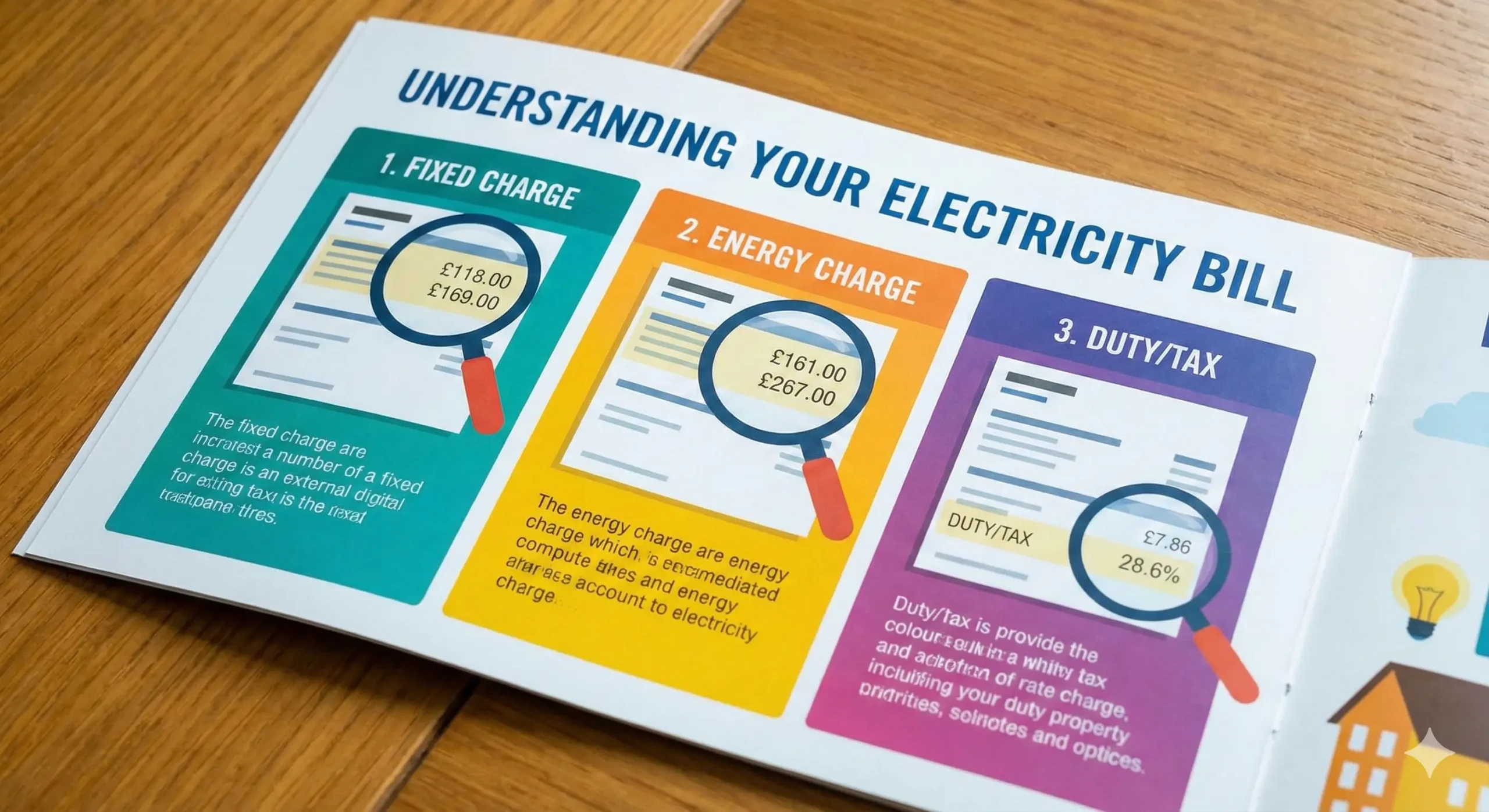
बिजली बिल समझ नहीं आ रहा? यहाँ है आपके बिल का पूरा विश्लेषण (Full Bill Analysis 2026)
क्या आप भी अपना बिजली बिल देखकर हैरान हो जाते हैं? कई बार हमें लगता है कि हमने बिजली कम जलाई, फिर भी बिल ज्यादा क्यों आया? बिल में लिखे अजीबोगरीब शब्द जैसे Fixed Charge, Duty, Surcharge आम आदमी की समझ से परे होते हैं।
अगर आप UPPCL (उत्तर प्रदेश) या भारत के किसी भी राज्य के उपभोक्ता हैं, तो यह गाइड आपके लिए है। आज हम आपके बिजली बिल का पोस्टमार्टम करेंगे और एक-एक चार्ज का मतलब समझाएंगे ताकि अगली बार कोई आपको ठग न सके।
विषय-सूची (Table of Contents)
1. बिल के मुख्य घटक (Main Components of Bill)
जब आप अपना बिल देखते हैं, तो वह मुख्य रूप से 4 हिस्सों में बंटा होता है। इसे आसान भाषा में समझें:
- Fixed Charge: मीटर का किराया या कनेक्शन चार्ज (चाहे बिजली जलाएं या न जलाएं)।
- Energy Charge: जितनी बिजली आपने जलाई (Units), उसका पैसा।
- Electricity Duty (ED): सरकार द्वारा लगाया गया टैक्स।
- Surcharge/Interest: देर से बिल भरने पर लगा जुर्माना या ब्याज।
2. फिक्स्ड चार्ज क्या है? (Fixed Charge Explained)
यह वह राशि है जो आपको हर महीने देनी ही पड़ती है, भले ही आपका घर बंद हो। यह आपके Sanctioned Load (स्वीकृत भार) पर निर्भर करता है।
अगर आपके घर का लोड 2 किलोवाट (KW) है और फिक्स्ड चार्ज की दर ₹110 प्रति किलोवाट है, तो:
2 KW × ₹110 = ₹220 (हर महीने फिक्स्ड चार्ज)
3. एनर्जी चार्ज और यूनिट कैलकुलेशन
यह बिल का सबसे बड़ा हिस्सा होता है। यह इस बात पर निर्भर करता है कि आपने कितनी यूनिट (KWh) बिजली खर्च की। यूपी में 'स्लैब सिस्टम' चलता है, यानी ज्यादा बिजली जलाने पर रेट बढ़ जाता है।
| यूनिट स्लैब (Units) | रेट (प्रति यूनिट) |
|---|---|
| 0 - 100 यूनिट | ₹5.50 |
| 101 - 150 यूनिट | ₹5.50 से ₹6.00 |
| 151 - 300 यूनिट | ₹6.50 |
| 300 से ऊपर | ₹7.00+ |
(नोट: ये दरें शहरी घरेलू कनेक्शन (LMV-1) के लिए अनुमानित हैं।)
4. ड्यूटी और सरचार्ज का खेल
Electricity Duty (ED): यह राज्य सरकार का टैक्स है। यूपी में यह आमतौर पर 5% होता है। यह 'Energy Charge' और 'Fixed Charge' के जोड़ पर लगता है।
Regulatory Surcharge: कभी-कभी कोयला महंगा होने पर या घाटा पूरा करने के लिए कंपनियां अलग से सरचार्ज लगाती हैं (जैसे हाल ही में FPPAS चर्चा में है)।
5. लोड और डिमांड (Technical Terms Decoded)
बिल में लिखे इन शब्दों को समझना बहुत ज़रूरी है:
- Sanctioned Load (S.L.): वह लोड जो आपने कनेक्शन लेते समय पास करवाया था (जैसे 2 KW)।
- Recorded Demand (M.D.): वह लोड जो आपने वास्तव में इस्तेमाल किया। स्मार्ट मीटर हर महीने आपका पीक लोड (Max Load) रिकॉर्ड करता है।
- Penalty: अगर आपका 'Recorded Demand', 'Sanctioned Load' से ज्यादा हो जाता है, तो आपको दोगुना फिक्स्ड चार्ज देना पड़ता है।
6. बिल कम करने के टिप्स (How to Reduce Bill?)
अब जब आप बिल समझ गए हैं, तो इसे कम कैसे करें?
- लोड सही कराएं: अगर आपका M.D. लगातार S.L. से ज्यादा आ रहा है, तो अपना लोड बढ़वा लें ताकि पेनल्टी से बच सकें।
- Power Factor: अगर आप कमर्शियल यूजर हैं, तो 'Capacitor Bank' लगाकर अपना पावर फैक्टर सुधारें। इससे बिल में छूट मिलती है।
- समय पर बिल भरें: ड्यू डेट से पहले बिल भरने पर 1% तक की छूट मिलती है।
7. अक्सर पूछे जाने वाले प्रश्न (FAQs)
Q1. बिल में 'Arrear' क्या है?
Arrear का मतलब है 'बकाया राशि'। यह पिछले महीने का वह पैसा है जो आपने जमा नहीं किया था।
Q2. स्मार्ट मीटर में रीडिंग कैसे देखें?
आप UPPCL Smart App डाउनलोड करके अपनी डेली रीडिंग और लोड देख सकते हैं।
Don’t Understand Your Bill? A Complete Analysis of Your Electricity Bill (2026 Guide)
Do you also get shocked seeing your electricity bill? Often we feel we consumed less power, yet the bill amount is high. Terms like Fixed Charge, Duty, Surcharge printed on the bill are often beyond a common man's understanding.
If you are a consumer of UPPCL (Uttar Pradesh) or any state in India, this guide is for you. Today, we will do a Post-Mortem of your electricity bill and explain every single charge so that no one can fool you next time.
Table of Contents
1. Main Components of Bill
When you look at your bill, it is mainly divided into 4 parts. Let's understand them in simple language:
- Fixed Charge: Meter rent or connection charge (payable even if usage is zero).
- Energy Charge: The cost of electricity units (KWh) you actually consumed.
- Electricity Duty (ED): Tax imposed by the State Government.
- Surcharge/Interest: Penalty or interest for late payment.
2. What is Fixed Charge?
This is the amount you have to pay every month, regardless of your consumption. It depends on your Sanctioned Load.
If your home load is 2 Kilowatts (KW) and the fixed charge rate is ₹110 per KW, then:
2 KW × ₹110 = ₹220 (Fixed Charge per month)
3. Energy Charge & Unit Calculation
This is the biggest chunk of your bill. It depends on how many units (KWh) you consumed. UP follows a 'Slab System', meaning the rate increases as you consume more.
| Unit Slab (Units) | Rate (per Unit) |
|---|---|
| 0 - 100 Units | ₹5.50 |
| 101 - 150 Units | ₹5.50 to ₹6.00 |
| 151 - 300 Units | ₹6.50 |
| Above 300 | ₹7.00+ |
(Note: These are approximate rates for Urban Domestic (LMV-1) connections.)
4. The Game of Duty & Surcharge
Electricity Duty (ED): This is a state tax. In UP, it is usually 5%. It is calculated on the sum of 'Energy Charge' and 'Fixed Charge'.
Regulatory Surcharge: Sometimes, companies levy an extra surcharge to recover losses or high coal prices (like the recently discussed FPPAS).
5. Load vs Demand (Technical Terms Decoded)
Understanding these terms is crucial to avoid penalties:
- Sanctioned Load (S.L.): The load you officially applied for (e.g., 2 KW).
- Recorded Demand (M.D.): The actual max load you used. Smart meters record your peak load every month.
- Penalty: If your 'Recorded Demand' exceeds 'Sanctioned Load', you have to pay double the fixed charges as a penalty.
6. Tips to Reduce Bill
Now that you understand the bill, here is how to reduce it:
- Correct Your Load: If your M.D. is consistently higher than S.L., increase your sanctioned load to avoid penalties.
- Power Factor: Commercial users should install a 'Capacitor Bank' to improve power factor and get rebates.
- Pay on Time: Paying before the due date can get you a rebate of up to 1%.
7. Frequently Asked Questions (FAQs)
Q1. What is 'Arrear' in the bill?
Arrear means 'Outstanding Dues'. It is the amount from the previous month that you did not pay.
Q2. How to check reading in Smart Meter?
You can download the UPPCL Smart App to check your daily reading and load status in real-time.